
Medical school taught you to diagnose, cure and heal. No longer to be the most overqualified typist in the world.
Yet here you are. You have learned to be “pajama time” charting. You do not even look at the patients when you visit them; you look at the computer screens. The administrative burden crushes the joy out of medicine, contributing to record-high physician burnout rates in 2026.
A solution is in medical scribes. Your EHR is handled by a dedicated professional whereas you attend only to clinical care. Sounds perfect, right?
Not so fast. When you bring a third party into your exam room or your digital working environment, you are adding new variables. Costs increase. Issues of management arise. Training takes time.
An unbiased view of the landscape is required by the independent physicians. Fluff in marketing will not aid in determining whether this investment will be worth it.
This is the raw reality on the advantages and disadvantage of medical scribes in your practice.
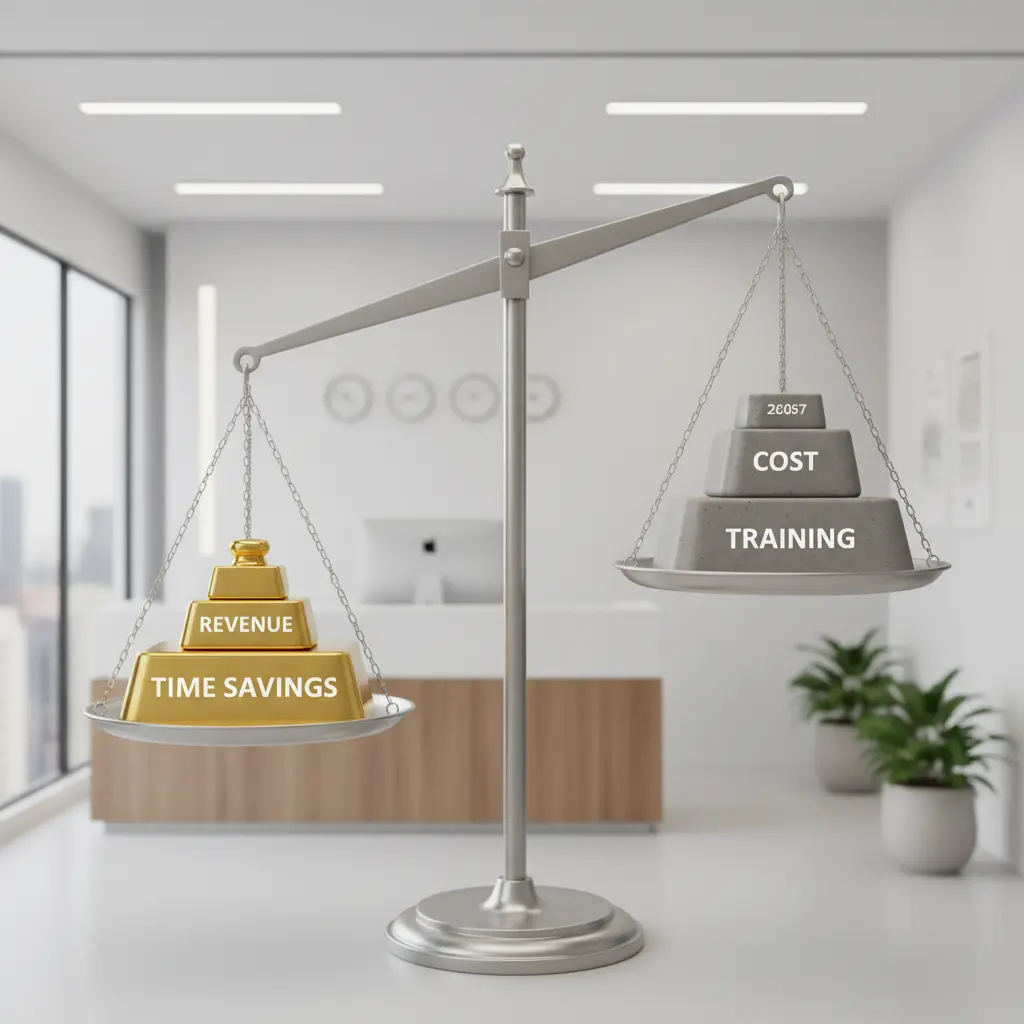
Table of Contents
- Top Benefits of Hiring a Medical Scribe
- Potential Drawbacks and Challenges
- Virtual vs In-Person Scribes: Mitigating the Cons
- Frequently Asked Questions
Top Benefits of Hiring a Medical Scribe
The medical scribe business soars due to the right reasons. Medical scribes not only benefit patients but also do so in a wide-ranging way. The workflow of the private practice is fundamentally changed with proper implementation.
Increased Revenue and Patient Volume
In nearly all practices, documentation introduces the bottleneck. Eliminate the slot, and the traffic of patients improves.
According to documentation time studies, physicians who use scribes take 50 percent of the time spent in documentation. The time regained does not disappear, it goes directly into billable encounters.
Revenue impact:
- Meet more patients: The scribe expenses will entirely be covered by adding two additional visits a day. All over and above that, is pure profit.
- Increased precision of coding: Scribes record information immediately resulting in more specific ICD-10 coding and comprehensive Review of Systems documentation. This favour greater billing levels that otherwise are down coded as a result of incomplete documentation.
Self-employed doctors work on a slim margin. Such increase in revenue makes the scribe a profit center instead of an expense.
Reduction in Physician Burnout.
The first advantage is burnout reduction. The intellectual strain of multitasking, i.e., listening to patients, diagnosing, and using cumbersome EHRs at the same time, is the cause of physician burnout.
Scribes allow you to forget about the computer. You can listen, think and practice medicine.
Outsourcing clerical tasks gives back your evenings and weekends. The psychological satisfaction of leaving behind your last patient with charts already closed increases your time of staying in the profession and elevates your quality of life, not inside the clinic.
Improved Documentation Quality
How many times do you complete charts at 7:00 PM, and you can hardly remember the details of a patient at 9:00 AM?
Memory fades. Critical information is lost during hours-delayed charting. Scribes record in real-time experience. Notes end when the patients make an exit.
Quality improvements:
- Greater detail history: Each subtlety of the History of Present Illness is caught.
- More adequate legal defense: Comprehensive, prompt notes are your greatest protection during a malpractice case.
- Real-time access: There is no waiting time in referrals and lab processes since the charts do not stay in 48 hour pending queues.

Potential Drawbacks and Challenges
It is imperative to consider disadvantages in order to make one decision. Lack of necessary practices to implement is a legitimate weakness of scribes in healthcare.
Time training and Onboarding.
Scribes do not come in as plug-and-play solutions. They must be educated about your ways, macros and likes within their medical scribe scope of practice.
The reality:
- Learning curve: It will take 2-4 weeks to experience slower workflows as scribes familiarize themselves. You are going to have to spend time fixing charts and justifying medical decision-making.
- High turnover: The hidden issue in the industry comes out here. A large number of face-to-face scribes are pre-med students who have to fulfill clinical hours. Medical school acceptance comes at the same moment that they have mastered your workflow. You re-initiate the process of recruitment and training.
Privacy Issues and Patient Comfort.
Close relationship between the patient and the physician is based on intimacy and trust. The presence of a third party in the examination room disrupts the situation.
A majority of the patients adapt rapidly. There are those who do not feel free to talk about sensitive subjects- sexual health, mental health, substance use, etc.- in the presence of a stranger. Although HIPAA subjects scribes to the law, the sense of diminished privacy makes patients conceal information.
This poses clinical danger that you should pay attention to.
Cost Overhead References.
Scribes are able to pay themselves, but initial expenses are hard. You include an extra salary, payroll taxes and benefits to your overhead. Some physicians consider the remote medical scribe and In-person scribe when evaluating budget options, though each solution addresses different pain points.
Poor practice volume is problematic. When you are not able to fill the additional appointments slots created by the efficiency of the scribes, ROI does not come immediately.
One practitioners with a fixed amount of dollars per case look at a grim future: in order to make a raised overhead of 30,000 (or more) each year, they must believe in the payoff.
Virtual vs In-Person Scribes: Mitigating the Cons
The market evolved. You are no longer faced with the option of doing it yourself or hiring a college student to stand in the corner. Virtual scribes were also considered to be a middle ground that enables medical scribes to overcome most advantages and disadvantages. Understanding how virtual medical scribes work helps you see why this model solves many traditional scribe problems.
Model Comparison:
The Solution of the Problem of Crowded Room.
- Face-To-Face: Miniature examination rooms are claustrophobic. The third wheel effect interferes with the comfort of the patient.
- Virtual: Scribes can link through the secure audio app on your tablet / phone. They are involved online but are physically present. This maintains encounter intimacy and gets all the required data.
Solving the Turnover Issue
- Face-to-Face: Students in non-permanent courses generate a high turnover.
- Virtual: A large number of companies have scribes working full time in centralized hubs who maintain strict HIPAA training standards. These are not the professionals who are leaving to medical school within six months. You hold your trained partner by the years.
Cost Efficiency
- Physical Space: Increased hourly charges and physical space (desk, computer, chair).
- Virtual: The cost is 20-40% less than in-person domestic agencies. No equipment purchases. No physical footprint. The remote scribe implementation process typically completes within one week with minimal disruption.
Privacy and cost concerns? On-line models address your problem. Requiring somebody to help move patients or retrieve supplies? Face-to-face scribes are better.
Frequently Asked Questions
Do patients prefer the presence of a medical scribe in the room?
The vast majority of patients are more satisfied due to the eye contact doctors maintain, rather than focusing on the computer screens. There are cases of privacy issues. Patients interpret it as high quality service when doctors clarify, this is my assistant taking notes so that I can concentrate 100 percent on you.
Do medical scribes save time?
Yes. Researchers indicate that doctors could save a maximum of 2 hours on a daily basis on documentation with the use of scribes. This helps them to get out of work on time or attend more patients. The process of work is changed to data verification that is much faster than data entry.
Is a medical scribe worth it to a small practice?
For many small practices, seeing just 1-2 extra patients per day covers scribe costs, making the investment ROI positive quickly. Beyond financial returns, the “lifestyle ROI”—avoiding burnout and getting home for dinner—proves priceless for independent physicians.
The Final Verdict
Your decision to hire a scribe depends on how you value your time. If you view charting as a necessary evil you can tolerate to save money, scribes might not fit.
But if you view your time as your most valuable asset and want to spend that time treating patients rather than clicking checkboxes, the benefits heavily outweigh the drawbacks.
Whether you choose a virtual partner or an in-room assistant, reclaiming your role as a healer starts with letting someone else handle the typing. Start comparing scribe services to find the right fit for your practice.
ScribeRunner’s virtual model eliminates common scribe disadvantages while maximizing every benefit.
How We Solve the Problems:
- No turnover issues – Career scribes, not pre-med students
- No privacy concerns – Virtual model, no one in your exam room
- Lower costs – 40% less than in-person scribes
- Fast training – Operational within 2 weeks
All the Benefits You Want:
- Reduced burnout (leave on time every night)
- Better documentation (real-time, accurate notes)
- Improved patient satisfaction (more eye contact, less screen time)
Contact us to discuss your specialty-specific needs:
Service Areas: Miami, Fort Lauderdale, Tampa, Orlando, and practices nationwid
Phone: (786) 866-7849
Location: 25 SE 2nd Ave, Suite 1030, Miami, FL 33131
Hours: Monday-Friday, 8 AM-6 PM EST