

Healthcare BPO (business process outsourcing) describes the transfer of selected administrative and support functions to an external healthcare service provider. It can help an organization to address its workload, utilize specialized expertise, and focus on its core mission.
Administrative and support functions in healthcare are diverse. Medical billing, coding, insurance verification, claims processing, scheduling, documentation, and patient support are some of the areas that require dedicated professionals. However, managing every function in-house can be challenging, especially for organizations with a growing workload.
Healthcare business process outsourcing offers a solution by delegating specific processes to an external company. Instead of managing all functions internally, an organization can outsource selected processes to a company with the necessary expertise, infrastructure, and technology. The choice of processes to delegate depends on an organization's needs. Some companies may want to outsource only their billing and insurance verification functions while others handle multiple processes.
Healthcare BPO can also help an organization to be more efficient with its operations. By delegating selected administrative functions, an organization can free its employees from repetitive tasks and focus their efforts on processes that require human skills. At the same time, it is important to consider the responsibilities, communication channels, quality control, and security measures when outsourcing. For a closer look at how BPO partners specifically drive down costs and lift efficiency, see our related guide on how healthcare BPO companies enhance efficiency and reduce costs.
While healthcare BPO covers a broad range of outsourced functions, this guide focuses on how the model works, what services it includes, and where the industry is heading.
Healthcare BPO Explained: What Services Can Healthcare Organizations Outsource?
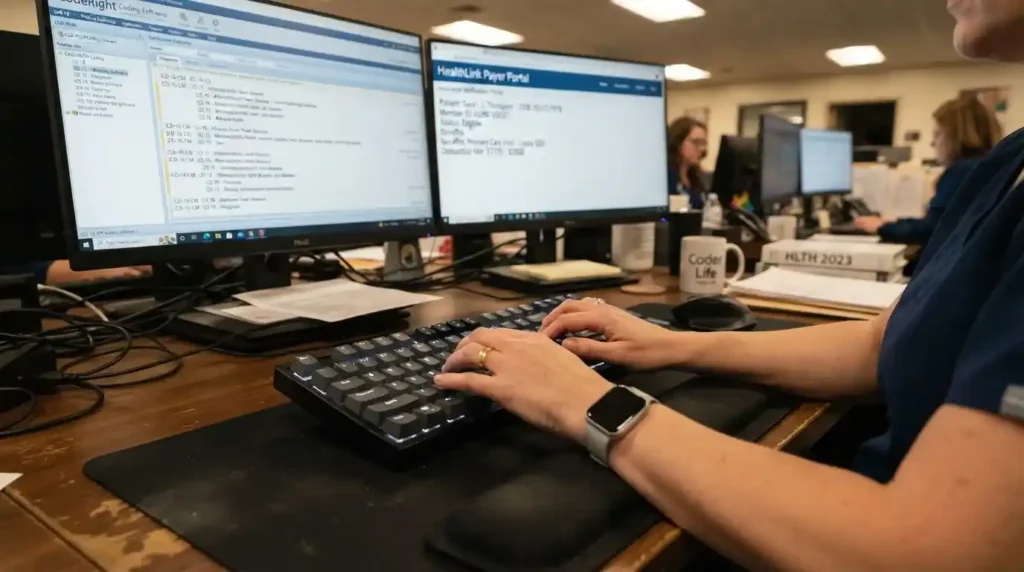
Healthcare BPO can include medical billing and coding, claims processing, insurance verification, patient support, data entry, and other administrative functions. It depends on an organization's needs and outsourcing plan.
Healthcare BPO explained in simple terms can be seen as delegating selected processes to an external provider instead of managing them internally. Typically, the functions are administrative, financial, technical, or related to support services. Clinical and treatment functions are usually performed by the healthcare organization.
Some of the most common services that healthcare companies outsource include:
- Medical billing and claims processing
- Medical coding and documentation
- Insurance verification and eligibility
- Accounts receivable management
- Patient scheduling and support
- Data entry and management
- Healthcare transcription services
- Payment and claims follow-up
Medical billing is a good example of a process that can be outsourced. The function can be complex and time-consuming since it involves verifying patient information, checking their insurance plans, submitting claims to payers, posting payments, and following up on denied or rejected claims. At the same time, medical coding also requires expertise to ensure proper documentation.
Healthcare organizations can choose to outsource some or all of these processes. It depends on the organization's needs, available resources, and outsourcing strategy. Even small medical practices can benefit from outsourcing since they do not have to handle every function in-house. Practices that specifically want help with pre-treatment approvals often turn to prior authorization outsourcing as a starting point.
At the same time, it is important to note that delegating processes to an external party requires establishing the responsibilities, communication channels, quality control, and security measures. It will help the organization and the BPO provider to set expectations and ensure smooth operations. For a broader breakdown of what falls under this umbrella including IT and clinical support see our guide to healthcare outsourcing services.
What Are the Benefits of Healthcare BPO for Modern Healthcare Providers?
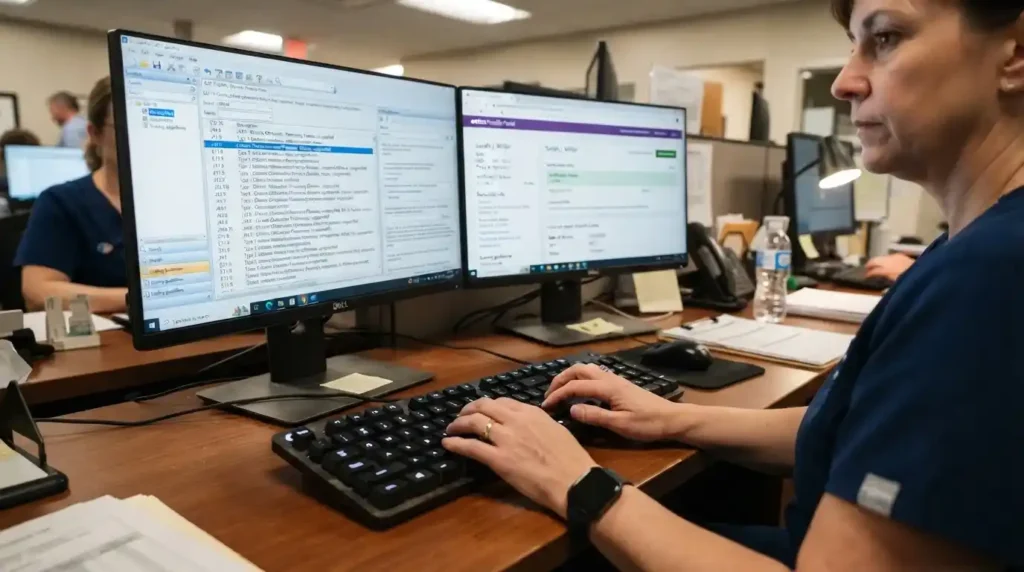
Healthcare BPO can reduce an organization's administrative workload, utilize external expertise, improve its efficiency, and help it scale its operations. The benefits can help healthcare providers to focus on their core mission and be more productive.
Modern healthcare providers have to manage a wide range of responsibilities. They have to ensure high-quality patient care while also handling administrative and financial duties. Outsourcing can help an organization to reduce its workload by delegating some of these functions to an external provider. In turn, the company can utilize the cost and time savings to invest in its core mission.
Another benefit is the opportunity to leverage the expertise of the BPO provider. Healthcare BPO companies typically have experienced professionals who can handle complex processes such as medical billing, coding, claims management, and insurance verification. Outsourcing these functions can be beneficial for organizations that do not have the resources to hire and train specialists.
At the same time, healthcare BPO can also help an organization to be more flexible and efficient. The volume of claims, patient load, and other factors can affect the operations of a medical practice or hospital. A BPO provider can help to manage the workload and scale operations up or down depending on the organization's needs.
In addition, outsourcing can help to reduce the administrative burden on an organization's staff. By delegating some of the repetitive and time-consuming tasks to an external company, the employees will have more time and energy for their core responsibilities — including reducing after-hours charting through outsourced medical scribe support.
However, it is important to understand that healthcare BPO is not always the best option. Providers have to consider the benefits and challenges of outsourcing before choosing to delegate specific processes to an external company.
How Does Medical Billing Outsourcing Work and What Does Healthcare BPO Handle?

Medical billing outsourcing describes the delegation of selected billing functions to an external organization. The company can handle the claims submission, payment posting, and follow-up on denied or rejected claims.
Medical billing can be a complex and time-consuming process. It typically involves multiple steps, and one error can affect the entire claim. Outsourcing the function to a specialized company can help a healthcare provider to manage the workload and ensure that the claims are processed correctly.
The billing company can handle different aspects of the process depending on an organization's needs and the contract terms. Typically, the provider will submit the claims to payers, post payments, and follow up on denied or rejected claims. At the same time, the company can also handle coding, claim submission, and payment posting. This work sits at the center of revenue cycle management, which ties billing, coding, and collections into a single financial workflow.
Medical billing outsourcing can also help to follow up on claims and ensure that they are paid. If a claim is denied or rejected, the billing company can review the details, correct the errors, and resubmit the request. It can help the healthcare provider to reduce the number of outstanding payments and ensure continuous revenue flow.
It is also important to note that communication with the billing company is critical. The provider has to inform the company about the organization's requirements, payer guidelines, documentation rules, and other aspects of the process. In addition, the healthcare company has to review the performance of the billing provider on a regular basis to ensure that the claims are processed correctly and in a timely manner.
For organizations that want to learn more about the medical billing process and coding guidelines, the American Academy of Professional Coders (AAPC) offers a comprehensive overview of the industry standards.
Healthcare BPO vs. In-House Operations: Pros, Cons, and Key Differences
Healthcare BPO can offer access to external expertise, while in-house operations provide more control. The choice depends on an organization's needs, resources, and priorities.
| Factor | Healthcare BPO | In-House Operations |
|---|---|---|
| Staffing | External provider manages staff | Organization hires and manages employees |
| Expertise | Access to specialized teams | Depends on internal expertise |
| Scalability | Easier to adjust support | Expansion may require new hiring |
| Control | Requires vendor oversight | Greater direct control |
| Technology | Provider may supply specialized tools | Organization manages its own systems |
| Workload | Reduces pressure on internal teams | Internal staff handle the workload |
Healthcare BPO vs. In-House Operations: Benefits, Costs, and Key Considerations
One of the main benefits of healthcare BPO is that an organization can benefit from the experience and expertise of the provider's staff. However, the company will have to rely on the skills and performance of the BPO employees. At the same time, healthcare providers can retain control over their operations by keeping specific functions in-house.
Organizations have to consider the advantages and disadvantages of outsourcing before deciding whether to delegate specific processes to an external company. Outsourcing can help to reduce the workload, utilize the expertise of the BPO provider, and be more flexible and efficient. At the same time, a healthcare company will have to invest more time and resources into the process compared to using an external service.
Another factor to consider is the cost of in-house operations. Maintaining a team of specialists can be expensive, especially for small medical practices and healthcare organizations. At the same time, outsourcing can also be costly depending on the processes that a company delegates to the BPO provider.
What Are the Latest Healthcare BPO Industry Trends and What Is the Future of Healthcare Outsourcing?

Healthcare BPO industry trends suggest that the future of healthcare outsourcing will be driven by automation, artificial intelligence, and other technologies. These advancements will make the industry more specialized and efficient.
How Technology Is Changing Healthcare BPO
Artificial intelligence and automation can help to make healthcare BPO more efficient by handling repetitive and time-consuming tasks. In addition, the use of cloud-based technologies can make collaboration easier for distributed teams. This is especially visible in ambient documentation tools see our guide to ambient clinical intelligence for how AI-assisted charting is reshaping clinical workflows.
Why Healthcare BPO Market Growth Is Increasing
Healthcare organizations are under pressure to reduce costs and be more efficient. They are turning to outsourcing to address their needs and utilize the expertise of BPO providers. In addition, the industry is witnessing a shift toward more specialized services rather than general administrative support.
What the Future of Healthcare Outsourcing May Look Like
The future of healthcare outsourcing will continue to rely on technology to make processes more efficient while also leveraging the expertise of human professionals. Artificial intelligence can handle repetitive tasks, while complex cases will require the skills of experienced coders, billers, and other specialists.
At the same time, the security of patient health information will be a critical concern. Healthcare organizations have to ensure that their BPO providers follow the necessary security measures and protocols.
When healthcare organizations outsource services that involve protected health information (PHI), they also need to consider HIPAA requirements and the responsibilities of business associates. The U.S. Department of Health & Human Services explains that covered entities generally need a written business associate agreement when an external provider handles PHI on their behalf. Learn more from HHS.gov.
Frequently Asked Questions About Healthcare Business Process Outsourcing
Healthcare BPO allows organizations to delegate their administrative and support functions to external providers. It can help a healthcare company to reduce its workload and focus on its core mission.
What is healthcare business process outsourcing?
Healthcare business process outsourcing describes the practice of delegating selected administrative or operational functions to an external service provider. The process can help an organization to address its workload, utilize the expertise of the provider, and focus on its core mission.
What's the difference between healthcare BPO and in-house operations?
Healthcare BPO gives organizations access to specialized external teams and easier scalability, while in-house operations offer greater direct control over staffing, technology, and workflows. Most healthcare providers choose a mix of both depending on which functions are core to their mission and which are purely administrative.
What questions are asked in a healthcare BPO interview?
Healthcare BPO interview questions may cover topics related to medical billing, insurance claims, patient communication, data accuracy, confidentiality, and general knowledge of healthcare procedures.
How does medical billing outsourcing work?
A healthcare organization delegates selected functions to a billing company. The provider can handle coding, claim submission, posting payments, and following up on denied or rejected claims.
What is the future of healthcare outsourcing?
The future of healthcare outsourcing will rely on artificial intelligence, automation, and other technologies. In addition, the industry will continue to evolve and become more specialized.
Conclusion
Healthcare business process outsourcing can help organizations to address their administrative and support needs. From medical billing and coding to claims processing and patient support, healthcare BPO can alleviate the workload of an organization and provide access to the expertise of the provider.
However, it is important for healthcare companies to choose the right outsourcing partner and ensure that they have the necessary oversight. By delegating the appropriate processes, an organization can be more efficient and productive while also focusing on its core mission.
Looking to outsource with a hybrid AI-and-human model? See how ScribeRunner supports medical billing, RCM, scheduling, and documentation.