What Does a Nurse Auditor Do? A Complete Guide to Their Daily Responsibilities
If you have ever wondered how hospitals, skilled nursing facilities, and insurance companies make sure that the care documented in a patient's chart actually matches the care that was billed for, the answer usually involves a nurse auditor. Working quietly behind the scenes, nurse auditors protect both patient care quality and a facility's financial health - yet very few people outside of healthcare administration know exactly what the role involves.
Many people first come across the title "nurse auditor" while researching healthcare careers, exploring compliance roles, or trying to understand who reviews medical charts before a claim is paid. Although nurse auditors don't treat patients directly, they play a critical role in making sure medical records are accurate, complete, and compliant with regulatory standards.
As healthcare regulations grow more complex and reimbursement models like the Patient Driven Payment Model (PDPM) become more common, demand for skilled nurse auditors continues to rise - especially for remote and virtual nurse auditor roles, which allow experienced RNs to apply their clinical knowledge without direct bedside work.
In this guide, you'll learn exactly what nurse auditors do, the skills the role requires, where they work, and whether this career path might be the right fit for you.
Why Nurse Auditors Play a Vital Role in Healthcare
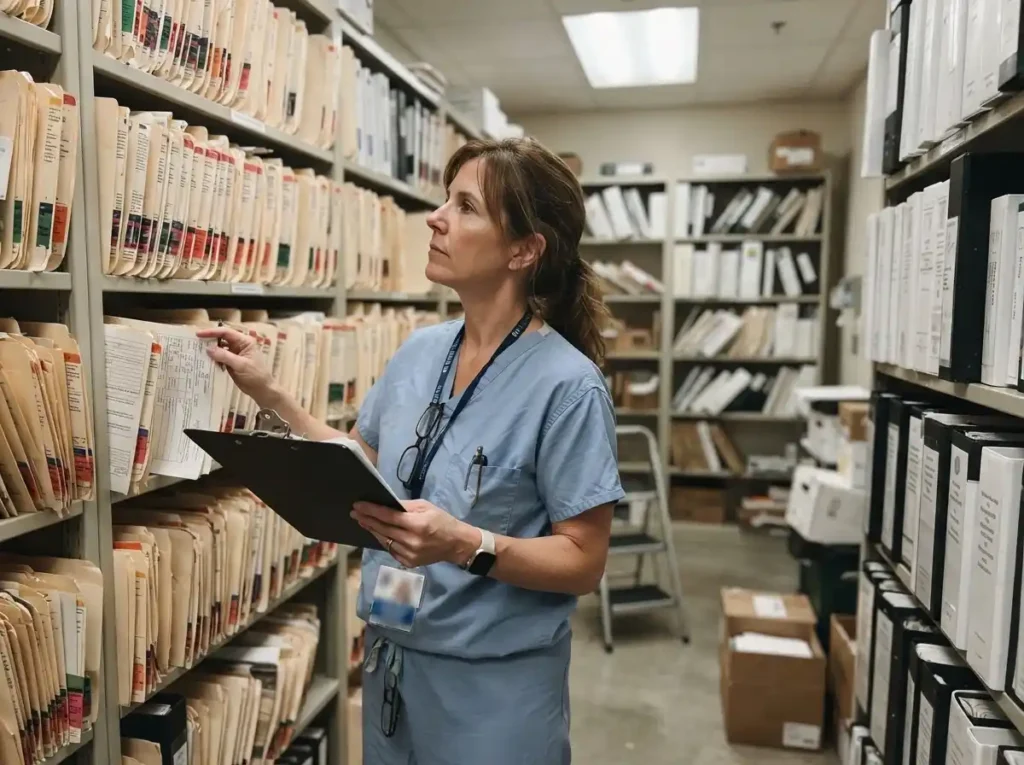
Every well-run healthcare facility depends on accurate documentation. While physicians and nurses focus on diagnosing and treating patients, someone still needs to confirm that what was documented in the chart supports the level of care billed, meets quality standards, and satisfies regulatory requirements.
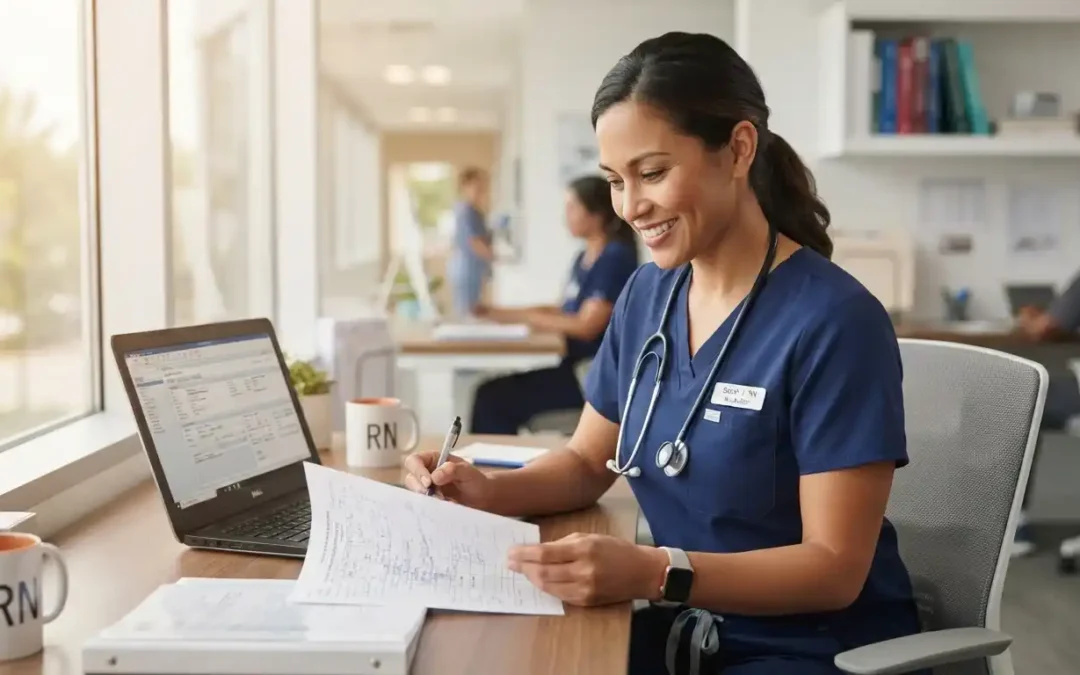
A nurse auditor works alongside clinical staff, billing teams, and compliance departments to review medical records for accuracy, completeness, and regulatory alignment. Their work protects facilities from claim denials, compliance penalties, and lost reimbursement while also helping ensure patients are receiving (and are recorded as receiving) the appropriate standard of care.
In many skilled nursing facilities and hospitals, a nurse auditor is also the first line of defense during external audits, whether from Medicare, Medicaid, or private payers. By catching documentation gaps early, nurse auditors help facilities stay "audit-ready" year-round rather than scrambling before a survey.
What Do Nurse Auditors Do During a Typical Workday?
No two days look exactly alike for a nurse auditor. Their work usually shifts between chart review, compliance checks, physician communication, and reporting, depending on audit schedules and facility needs.
Common daily tasks include:
- Reviewing patient charts for documentation accuracy and completeness
- Comparing clinical documentation against billed services
- Checking compliance with Minimum Data Set (MDS) and PDPM requirements
- Flagging missing signatures, orders, or supporting documentation
- Communicating documentation gaps to physicians or nursing staff
- Preparing audit summaries and compliance reports
- Supporting internal Quality Assurance (QA) and Quality Improvement (QI) initiatives
- Assisting with survey preparedness ahead of state or federal inspections
Core Responsibilities of a Nurse Auditor
Reviewing Medical Records for Accuracy
A nurse auditor's central responsibility is confirming that clinical documentation is complete, accurate, and consistent with the care that was actually provided. This includes checking for proper diagnosis coding support, appropriate levels of care, and clear physician orders.
Ensuring Compliance with Reimbursement Models
In skilled nursing and post-acute settings, nurse auditors routinely evaluate documentation against Minimum Data Set (MDS) and Patient Driven Payment Model (PDPM) requirements to ensure facilities are reimbursed correctly and remain compliant with CMS guidelines.
Identifying and Reducing Claim Denials
By catching documentation issues before claims go out, nurse auditors help reduce denials and delays in the revenue cycle — directly supporting a facility's financial stability.
Supporting Survey and Audit Readiness
Nurse auditors prepare facilities for state surveys and payer audits by proactively identifying gaps, correcting them, and maintaining organized, defensible documentation.
Collaborating with Clinical and Billing Teams
Because their work touches both patient care and revenue, nurse auditors regularly communicate with physicians, nursing staff, coders, and billing departments to resolve documentation discrepancies quickly.
Skills Every Nurse Auditor Should Develop
Clinical Knowledge: A strong nursing background is essential to judge whether documentation accurately reflects the patient's condition and care received.
Attention to Detail: Small documentation errors can lead to claim denials or compliance violations, so precision matters enormously.
Regulatory Knowledge: Familiarity with CMS guidelines, MDS, PDPM, and payer-specific requirements is critical.
Communication Skills: Nurse auditors often need to explain documentation gaps to physicians and nursing staff in a clear, non-confrontational way.
Analytical Thinking: Reviewing charts against billing and compliance standards requires strong analytical and critical-thinking skills.
Where Do Nurse Auditors Work?
Nurse auditors are employed across a wide range of healthcare settings, including:
- Hospitals and health systems
- Skilled nursing facilities (SNFs) and post-acute care facilities
- Insurance companies and payers
- Revenue cycle management companies
- Remote/virtual nurse auditor teams supporting multiple facilities
Remote nurse auditor roles, in particular, have grown significantly as facilities look for ways to access experienced clinical auditors without adding to on-site headcount. Services like ScribeRunner's Nurse Auditors support skilled nursing and post-acute facilities with clinical audits, MDS and PDPM review, and survey preparedness — all handled remotely by trained clinical staff.
Education and Training Requirements
Most nurse auditor positions require an active Registered Nurse (RN) license, along with clinical experience in areas such as med-surg, long-term care, or case management. Many employers also look for familiarity with EHR systems and payer documentation standards.
Additional certifications can strengthen a nurse auditor's career prospects, including credentials related to clinical documentation improvement and healthcare compliance auditing, such as those offered through the Association of Clinical Documentation Integrity Specialists (ACDIS) and coding-related credentials through AAPC.
Nurse Auditor vs. Clinical Documentation Specialist: Understanding the Difference
The two roles are closely related and sometimes overlap, but they generally differ in focus. A nurse auditor primarily reviews completed records for compliance, billing accuracy, and audit readiness, often working retrospectively.
A Clinical Documentation Specialist usually works concurrently, reviewing documentation in real time or shortly after a patient encounter to make sure it accurately reflects severity of illness and supports appropriate reimbursement before a claim is even submitted.
Facilities often use both roles together: documentation specialists strengthen charting at the point of care, while nurse auditors provide a compliance safety net before and after billing.
Career Outlook and Growth Opportunities
Demand for skilled nursing and healthcare compliance professionals continues to grow as regulatory requirements become more complex. According to the U.S. Bureau of Labor Statistics, registered nursing the core credential behind most nurse auditor roles remains one of the largest healthcare occupations, with steady demand across clinical and non-clinical specialties.
For RNs looking to move away from bedside care while still using their clinical expertise, nurse auditing offers a natural transition often with the added flexibility of remote work.
Benefits and Challenges of Being a Nurse Auditor
Advantages
- Uses clinical expertise in a non-bedside role
- Often available in remote or hybrid formats
- Clear connection between daily work and facility outcomes
- Opportunities to specialize in compliance, coding, or documentation improvement
Challenges
- Requires staying current with frequently changing CMS and payer guidelines
- Can involve difficult conversations with physicians or staff about documentation gaps
- Detail-heavy work that leaves little room for error
Is Becoming a Nurse Auditor the Right Career for You?
If you have a nursing background, enjoy detail-oriented work, and want to apply your clinical knowledge without direct patient care, nurse auditing can be a rewarding next step. It suits RNs who are methodical, comfortable with regulatory detail, and interested in the business side of healthcare as much as the clinical side.
Conclusion
A nurse auditor's role sits at the intersection of clinical accuracy, regulatory compliance, and financial protection for healthcare facilities. Their work reviewing charts, supporting PDPM and MDS compliance, and preparing facilities for audits keeps organizations both compliant and financially healthy.
As more facilities move toward remote support models, nurse auditing has become an increasingly flexible and in-demand specialty. To see how a remote nurse auditor team can help your facility stay audit-ready, explore ScribeRunner's Nurse Auditor services or book a demo to learn more.
Frequently Asked Questions
1. What does a nurse auditor do every day?
Nurse auditors review medical charts for accuracy and compliance, check documentation against MDS/PDPM requirements, flag missing information, and prepare facilities for internal and external audits.
2. What is the difference between a nurse auditor and a clinical documentation specialist?
A nurse auditor typically reviews completed records for compliance and billing accuracy, while a clinical documentation specialist works concurrently to strengthen documentation at the point of care.
3. Do nurse auditors need to be RNs?
Yes, most nurse auditor positions require an active RN license along with relevant clinical experience.
4. Can nurse auditors work remotely?
Yes. Remote and virtual nurse auditor roles have grown significantly, allowing facilities to access experienced auditors without adding on-site staff. Learn more about remote clinical support options.
5. Is nurse auditing a good career for RNs?
For RNs who want to step away from bedside care while still using their clinical expertise, nurse auditing offers a stable, detail-focused career path with growing demand and remote flexibility.