
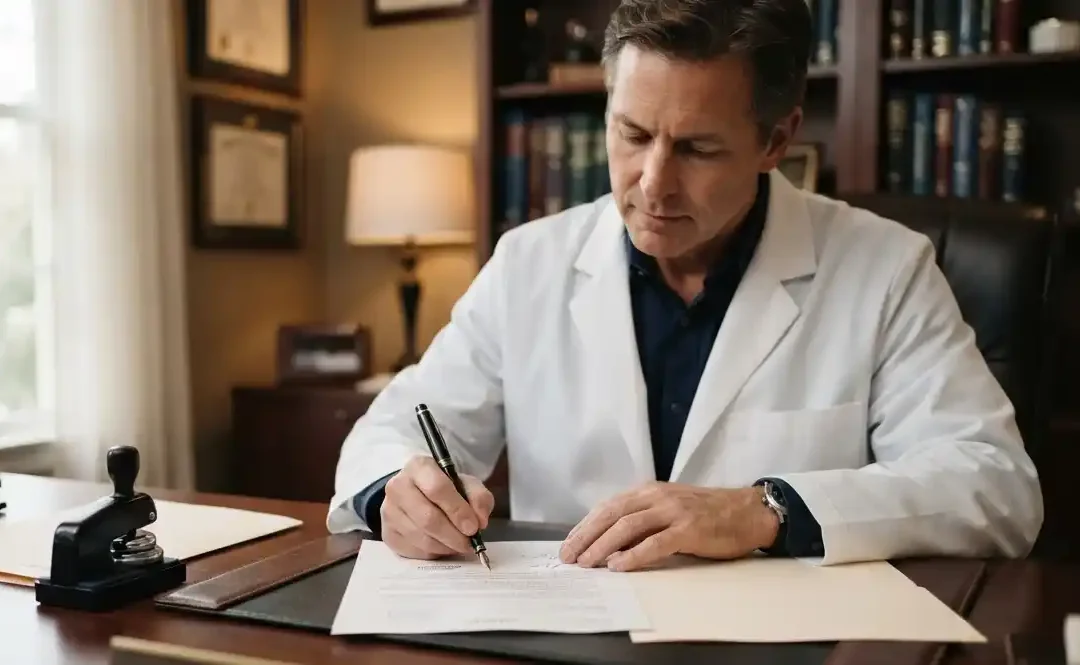
Quick Answer: A physician affidavit is a sworn, notarized statement from a doctor confirming specific medical facts or opinions for use in a legal case, guardianship filing, or insurance dispute.
Ask any personal injury attorney what slows a case down, and a physician affidavit will probably come up. It sounds like a small piece of paperwork. It isn't. A guardianship petition, a disability appeal, an injury claim , all of these can sit on a shelf until a doctor signs off on the facts.
And getting that signature is rarely quick. Doctors are busy. Records need to be pulled. Someone has to write language a court will actually accept. This guide walks through what a physician affidavit actually is, when you need one, where things usually go wrong, and what a strong one looks like.
What Is a Physician Affidavit and Why Does It Matter in Court?

A physician affidavit is a written statement from a doctor, sworn under oath, confirming specific facts about a patient's medical condition. Courts, insurers, and government agencies treat it as formal evidence not just a note from the doctor's file.
That's the real difference between a physician affidavit and a regular medical record. An affidavit is a sworn legal statement, signed in front of a notary, and the physician is putting their name behind every line. Get the language wrong or leave out a key detail, and the whole document can lose its value in court.
A solid physician affidavit usually covers the diagnosis, the treatment the patient received, the prognosis, and the physician's opinion on whatever question the case turns on.
When Do Attorneys Actually Need One?
There's no single scenario where a physician affidavit comes up. It shows up across several types of cases, and the requirements shift depending on where you're filing.
Personal Injury Cases
Here, the affidavit backs up injury severity, causation, and how long recovery is expected to take. It gives an attorney something concrete to point to during settlement talks, without dragging the physician into court every time.
Guardianship and Incapacity Proceedings
Before a court appoints a guardian or conservator, it usually wants a physician affidavit of incapacity on file. The doctor has to confirm based on an actual examination that the person can't manage their own affairs anymore.
Disability and Workers' Compensation Claims
Insurers and disability boards lean on physician affidavits to check whether a claimant's condition meets the legal bar for disability. A vague affidavit is one of the fastest ways to get a claim denied.
Medical Malpractice Litigation
Several states won't let a malpractice case move forward without a physician affidavit of merit basically a qualified expert saying, in writing, that the claim has legitimate grounds.
Where Physician Affidavit Requests Usually Go Wrong And Why

Ask any attorney who's requested one directly, and they'll tell you the same thing: physicians are hard to pin down. Reviewing charts, drafting language, and finding time to sit with a notary just isn't a priority for someone seeing patients all day.
There's also a liability question underneath all of it. A lot of doctors are reluctant to sign something they didn't write themselves, especially if the wording feels broad or open-ended. That hesitation is what turns a straightforward request into a three-week back-and-forth.
Then there's formatting. Courts can and do reject a physician affidavit for missing the right legal phrasing, skipping a notarization step, or ignoring jurisdiction-specific rules. One missing clause, and the whole thing lands back on the physician's desk.
What Actually Belongs in a Strong Physician Affidavit
A physician affidavit that holds up is specific not general. At minimum, it should include:
- The physician's full name, credentials, and relationship to the patient
- What was actually reviewed records, exams, treatment history
- Clear factual statements that directly answer the legal question at hand
- The physician's opinion, stated with the right level of medical certainty
- A signature block that's properly notarized for the jurisdiction
Vague wording is the single biggest reason courts push back on these documents. Specific dates, specific findings, and clear clinical reasoning make an affidavit much harder to challenge.
How One Actually Gets Prepared
Whether an attorney's office handles this in-house or brings in outside help, the process tends to follow the same rough path.
- 1. Someone reviews the records. The relevant medical history gets pulled and reviewed for facts that support the legal claim.
- 2. A draft gets written. Someone puts together language that's medically accurate and formatted correctly for the jurisdiction.
- 3. The physician reviews and signs. The doctor reads it over, makes any edits, and signs in front of a notary.
- 4. It gets delivered. The finished, notarized affidavit goes to the attorney, ready to file.
Doing the drafting work upfront saves the physician's time they're editing, not starting from a blank page. It also gives the attorney a document that's been through a real review process instead of something dashed off in ten minutes.
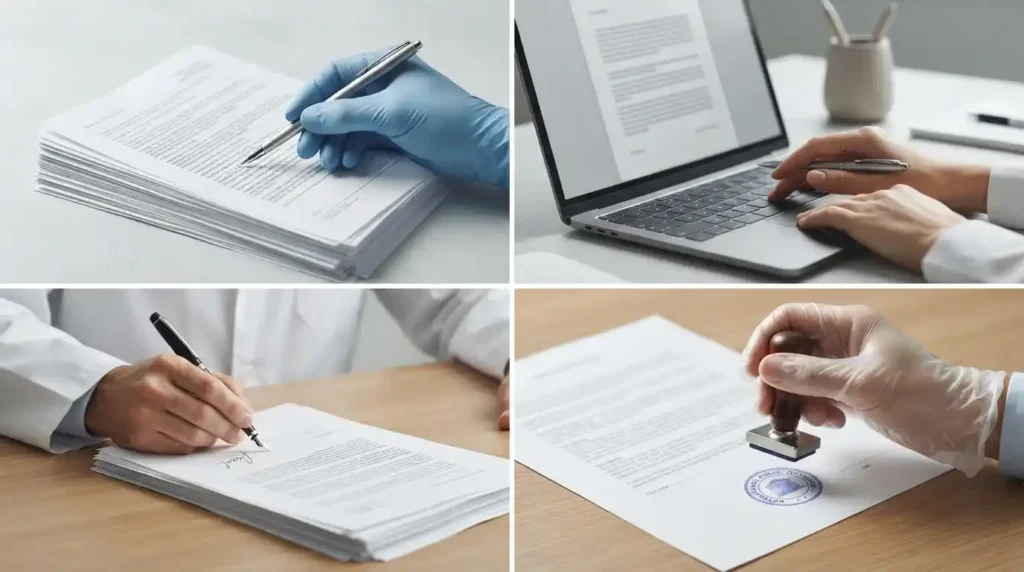
Physician Affidavit vs. Other Medical-Legal Documents
Attorneys sometimes mix up a physician affidavit with a medical summary or a records review and it's an easy mistake to make, since all three documents pull from the same medical file. But the similarities end there. Each one serves a different purpose, carries a different level of legal weight, and gets used at a different stage of a case. So before requesting the wrong document and losing time, here's how they actually differ.
| Document | Purpose | Legal Weight | Requires Notarization |
|---|---|---|---|
| Physician Affidavit | Sworn statement confirming specific facts or opinions | High treated as formal evidence | Yes |
| Medical Summary | Organized overview of treatment history | Reference material | No |
| Records Review | Flags gaps, inconsistencies, or timeline issues | Reference material | No |
| Physician Letter | Informal statement from a physician | Low not sworn | No |
Of these four, only the affidavit carries roughly the same weight as testimony given in court.
Why the Prep Work Matters More Than People Think
An affidavit that's drafted carefully before it reaches the doctor tends to move faster through the whole process. Because the language is already accurate, courts are less likely to bounce it back, and physicians are more willing to sign something instead of rewriting it themselves. In fact, most delays at this stage come down to one thing: the doctor doesn't trust the wording enough to put their name on it.
That's why it's also worth checking that whoever prepares the draft understands both the medical facts and the specific formatting a jurisdiction expects. After all, those rules aren't always the same from state to state a format that works in one court can get rejected in another. Since a physician affidavit involves sensitive patient information, the person preparing it must handle it in line with HIPAA privacy requirements, the same way they would handle any other medical record. Even so, a licensed notary still has to witness and certify the signature, no matter who drafted the document or how carefully they wrote it.
For more on how medical-legal documentation support works more broadly, take a look at Legal Documentation Solutions: Streamlining Medical Records for Legal Professionals and Legal Documentation Specialists: A Comprehensive Guide.
Conclusion
A single physician affidavit can decide whether a case moves forward or stalls out. Getting one signed properly takes more than a phone call to a doctor's office because most of these requests fail long before they reach the notary, not after.
So what actually separates a strong affidavit from a rejected one usually comes down to preparation, not luck. Attorneys who know what belongs in the document, and where these requests typically break down, put their legal team in a much stronger position from the start. And when the physician receives a draft that's already accurate and properly formatted, they sign it faster and with far less back-and-forth.
In the end, a physician affidavit isn't just paperwork sitting between a case and the courtroom. It's often the one document that decides which way a case goes so it's worth getting right the first time.
Frequently Asked Questions (FAQs)
1. What is a physician affidavit?
A sworn, notarized statement from a doctor confirming specific medical facts or opinions, used as evidence in a legal case.
2. How long does it usually take to get one?
It depends on the physician's schedule and how complex the case is. A well-drafted starting point, based on the actual medical records, usually cuts the timeline down significantly compared to starting from scratch.
3. Does a physician affidavit have to be notarized?
Yes. Without notarization, it's not a sworn statement and won't carry legal weight in court.
4. How is a physician affidavit different from a medical summary?
A medical summary is a reference document an overview of treatment. A physician affidavit is sworn testimony in written form, and it needs a notarized signature to count as one.
5. Why do some doctors hesitate to sign one?
Usually it comes down to liability, or language that feels too broad or unclear. A draft that's specific and grounded in the physician's own records tends to get signed much faster.