

Medical Assistant vs. Patient Care Technician: Key Differences
Choosing a healthcare career can be tough, especially when you can't tell the difference between two similar specialties. One of the most common professional dilemmas among aspiring healthcare professionals is medical assistant vs PCT. They both have to do with caring for patients, but there are some key differences between a medical assistant and a patient care technician. Both specialties are great for people who want to make a real difference in the healthcare sector without going through medical or nursing school. In this article, we'll go over the main distinctions between medical assistant vs PCT, discuss the difference between patient care technician vs medical assistant, and patient care assistant vs patient care technician, and analyze which specialty is right for you.
Understanding Medical Assistant and Patient Care Technician
Medical Assistants
Generally, medical assistants work in physician offices, clinics, and other healthcare facilities providing outpatient services. Their primary responsibilities fall under two categories: administrative and clinical support. Medical assistants handle a wide range of tasks, from scheduling appointments and updating medical records to preparing patients for examinations.
Patient Care Technicians
In contrast, patient care technicians spend most of their time providing direct care to patients. Their responsibilities include assisting patients with activities of daily living and helping nurses with specialized tasks. PCTs work in hospitals, nursing facilities, and rehabilitation centers.
While medical assistants and patient care technicians both play an essential role in patient care, these healthcare professionals have drastically different duties, responsibilities, and work environments.
Medical Assistant vs. PCT: The Main Differences
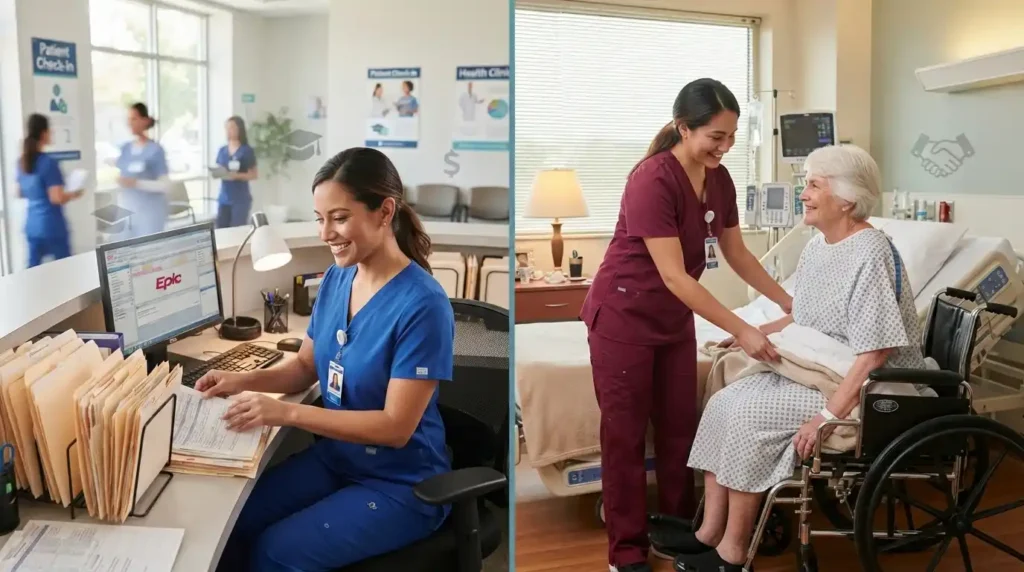
The main difference between a medical assistant and a patient care technician lies in the focus of their daily duties. A medical assistant provides both administrative and clinical support to physicians and healthcare providers, working mainly in outpatient settings such as doctor's offices and clinics. Their responsibilities often include scheduling appointments, managing patient records, taking vital signs, and assisting with minor clinical procedures. Because of this dual role, medical assistants help keep both the front-desk operations and clinical workflow running smoothly.
In contrast, a patient care technician (PCT) focuses primarily on direct, hands-on patient care rather than administrative tasks. PCTs typically work in hospitals, nursing homes, and long-term care facilities, where they assist patients with daily activities like bathing, dressing, and mobility, in addition to monitoring vital signs and supporting nursing staff. As a result, the key difference between medical assistant and PCT roles comes down to setting and scope: medical assistants balance clinical and administrative work in outpatient environments, while patient care technicians concentrate on continuous, hands-on care in more intensive healthcare settings.
Medical Assistant Responsibilities
Medical assistants perform administrative and clinical tasks assisting doctors and nurses in providing high-quality patient care. While the duties may vary depending on the employer and the state, these healthcare professionals typically handle the following responsibilities:
Administrative Duties
The administrative responsibilities of medical assistants involve maintaining the smooth operations of medical practices. These duties may include the following:
- Scheduling patient appointments
- Updating medical records
- Answering phone calls
- Processing claims
Medical assistants also provide various clinical support services to physicians, nurses, and patients. Some of the most common services include the following:
- Taking patient vitals
- Preparing examination rooms and medical equipment
- Recording patients' medical history
- Assisting physicians and nurses with examinations and procedures
- Collecting specimens for laboratory tests
- Preparing patients for diagnostic imaging and other procedures
- Cleaning and sterilizing medical equipment
Patient Care Technician Responsibilities

Unlike medical assistants, patient care technicians are primarily focused on providing direct patient care. They typically work in hospitals, nursing facilities, and rehabilitation centers. Their responsibilities often involve assisting patients with activities of daily living, helping nurses with various tasks, and observing and reporting changes in patients' conditions.
Direct Patient Care
PCTs often work in hospitals and healthcare facilities requiring round-the-clock patient care. Therefore, they spend a considerable amount of time at the hospital helping patients with activities such as the following:
- Bathing, grooming, dressing, and toileting
- Feeding and assisting patients with eating
- Walking and moving patients
- Helping patients get in and out of bed
- Making beds
- Providing emotional support to patients
Although this list of duties is extensive, patient care technicians do not work alongside doctors and nurses. Therefore, their responsibilities focus on providing comfort and assistance to patients.
Patient Monitoring and Observation
Patient care technicians regularly monitor patients and report changes to nurses and physicians. Their responsibilities may include:
- Measuring vital signs
- Reporting changes in patient condition
- Assisting with admissions and discharges
- Collecting specimens for testing
- Supporting rehabilitation exercises
Because they spend more time with patients, PCTs play an important role in monitoring their overall condition.
Medical Assistant vs. PCT Similarities
Although there are some differences in their responsibilities, medical assistants and patient care technicians have a number of similarities. Both occupations work with patients and health professionals, provide quality patient care, and make important contributions to the healthcare team.
Moreover, both medical assistants and patient care technicians have opportunities for career advancement. With additional education and training, they may enter other healthcare professions, such as nursing or physician assistant.
Medical Assistant vs. PCT: Salary and Education
Medical Assistant vs. PCT: Education and Certification
Both medical assistants and patient care technicians need to complete postsecondary education or training before working in the healthcare field. However, their training differs because they have different duties.
Medical Assistants
Medical assistants typically complete a certificate or diploma program that prepares them for a career in the medical field. The program covers medical terms, anatomy, clinical procedures, office procedures, and electronic health records. In addition, students need to pass certification exams to become certified medical assistants.
Patient Care Technicians
Meanwhile, patient care technicians need to complete a training program that prepares them for a career in patient care. The program covers infection control, patient safety, nursing, laboratory procedures, and clinical practice. Some programs offer hands-on training, whereas others do not. In addition, students need to pass certification exams to become certified patient care technicians. However, the requirements vary depending on the employer and state.
Medical Assistant vs. PCT: Skills
Both medical assistant and patient care technician careers require a mix of technical expertise and strong soft skills to succeed. Medical assistants need skills such as clinical procedure knowledge, medical terminology, and administrative software proficiency, along with soft skills like communication, organization, and multitasking to handle both patient care and office duties. Patient care technicians, on the other hand, rely more heavily on hands-on clinical skills such as taking vital signs, assisting with mobility, and monitoring patients, paired with soft skills like empathy, patience, and physical stamina to support patients through their daily needs.
Medical Assistant Skills
It is crucial for medical assistants to have developed good communication, organizational skills, and time management, since they need to fulfill both administrative and clinical duties. Moreover, they need to be good at technology and have high attention to detail. It is also necessary for them to develop their customer service skills since they communicate with people on a daily basis.
Patient Care Technician Skills
Since patient care technicians spend most of their time with patients, it is vital for them to develop their observational skills, empathy, patience, and communication skills. They also need to be physically strong and able to assist patients with basic hygiene because they tend to help them with their daily routine.
Medical Assistant vs. PCT: Workplace and Schedule
Medical assistants and patient care technicians work in different healthcare settings, which also plays a major role in shaping their day-to-day schedules and work environment. A medical assistant typically works in outpatient settings such as doctor's offices, private clinics, and small medical practices, where the pace is often structured around regular business hours, Monday through Friday. This makes their schedule relatively predictable, with occasional early mornings or extended hours depending on the practice's needs.
In contrast, a patient care technician usually works in hospitals, nursing homes, and long-term care facilities that operate around the clock. Because patient care is needed 24/7, PCTs often work in rotating shifts, including nights, weekends, and holidays. This difference in workplace and schedule between medical assistants and patient care technicians is an important factor to consider when choosing a career path, as it directly impacts work-life balance and daily routine.
Medical Assistants
Medical assistants can work in various healthcare settings, including physician's offices, clinics, and outpatient care facilities. Their work schedules generally involve regular daytime hours, although some practices may require evening or weekend hours.
Patient Care Technicians
Since patient care technicians work mainly in hospitals, rehabilitation centers, and long-term care facilities, their work schedules may vary between day and night shifts. Moreover, they often work weekends and holidays to ensure round-the-clock patient care.
In summary, medical assistants and patient care technicians differ in terms of work schedules. The former generally works in regular daytime hours, whereas the latter works in a variety of shifts, including nights, weekends, and holidays.
Patient Care Assistant vs. Patient Care Technician: What's the Difference?
Although the positions may be referred to similarly, there is a difference between the jobs. According to a patient care assistant vs patient care technician analysis, the patient care assistant provides basic care to patients while working under the guidance of nursing professionals. Some of the duties entail helping them take medications, feed, bathe, and dress the ill individuals. On the other hand, patient care technicians require extra training to perform more specialized tasks, such as taking vitals, collecting specimens, and conducting patient assessments. Thus, patient care technicians usually have a broader range of duties than assistants.
Medical Assistant vs. PCT: Career Outlook
Both medical assistants and patient care technicians are promising careers with good job prospects. The aging population and the growing emphasis on preventive care and home healthcare services have increased the demand for qualified healthcare professionals, including medical assistants and patient care technicians.
Although a variety of factors affect salary rate and career growth of these professionals, they both have great potential for stable income and career advancement. Medical assistants typically make a competitive salary, and they also have the opportunity to move into high-profile roles such as practice manager or advance their careers into healthcare-related fields such as nursing.
In a similar vein, patient care technicians can also continue their careers in nursing or other specialized healthcare areas. The right education, experience, and skills, patient care technicians and medical assistants can both become successful healthcare professionals while making a real difference in their patients' lives.
Medical Assistant vs. PCT: Choosing the Right Career
By now, it should be evident that a career as a medical assistant is different from a career as a patient care technician. By reviewing the differences between these two healthcare careers, including the job duties, skills, workplace environment, and salary, you should be able to decide which career suits your needs and preferences better.
Medical assistants perform a variety of administrative and clinical duties assisting physicians and patients in medical offices and clinics. In contrast, patient care technicians provide direct patient care in hospitals and other healthcare facilities. Thus, the main difference between a medical assistant vs. PCT is the scope of responsibilities.
If you are a prospective healthcare professional looking to enter the medical field, it is critical to analyze the differences between the medical assistant vs. PCT career options. By understanding the distinctions between the patient care technician vs. medical assistant, you will be able to choose the healthcare career path that fits you best.
Frequently Asked Questions (FAQs)
1. What is the basic difference between a medical assistant and a PCT?
The primary difference is that while medical assistants split their time between administrative and clinical support, patient care technicians spend more of their time working directly with patients, assisting nurses in hospitals and other healthcare facilities.
2. Are patient care technicians and patient care assistants the same?
They might be, but sometimes it depends on the place and state. A patient care technician can have more responsibilities than a patient care assistant and can be a step above them, so in some specific situations, they are not the same.
3. Does a medical assistant or a PCT work more closely with patients?
A PCT works more closely with patients because they assist them during each shift and care for them. Medical assistants work more closely with nurses in a healthcare facility and assist them with clerical and clinical tasks.
4. Can a medical assistant become a patient care technician?
Yes, they can, if a medical assistant has enough training or if the employer gives them an opportunity, because they have a slightly different job description. Many people become medical assistants for a period of time before becoming patient care technicians and advance their careers.
5. Therefore, which career is better: medical assistant or PCT?
It depends on a person interested in pursuing this career path and what they want. If a person prefers having more variety in a healthcare job, they can be a medical assistant. Patient care technicians care for patients more closely, so if someone prefers caring for people and working in a hospital, a PCT position might be a better choice for them.
Conclusion
A career as a medical assistant vs. PCT is a great way to begin your healthcare career while making a difference in the lives of others. Both medical careers are in high demand and offer great opportunities for career advancement, according to the Bureau of Labor Statistics. While medical assistants and patient care technicians play different roles in the healthcare system, they both make significant contributions to the well-being of patients and society as a whole.