

Medical records contain vital information about a patient's diagnosis, treatment, procedures, medications, test results, and more. To obtain the required documentation, medical record retrieval ensures that organizations can request and receive the information they need from the appropriate providers in a timely manner.
Obtaining healthcare documentation involves multiple entities such as hospitals, physicians, specialists, labs, and other facilities. Each entity has specific guidelines concerning the release of a patient's information. A systematic approach helps legal professionals ensure that all the required documentation is gathered in a timely manner.
Medical Record Retrieval Overview
This process involves obtaining a patient's healthcare documentation from providers. The records may consist of physician notes, hospital documents, treatment details, lab results, radiology reports, and other related paperwork.
Usually, the process begins when an entity requests the information. The provider then reviews the request and releases the required patient information.
These documents may be necessary for legal, insurance, disability, and other purposes. For lawyers, obtaining healthcare documentation is essential when reviewing a patient's medical history and preparing a case.
Medical record retrieval involves obtaining a patient's healthcare documentation from providers. The process typically requires identifying the required information, locating the facilities that have the documents, submitting a request, following up on its status, and organizing the information.
Why Is Medical Record Retrieval Important?
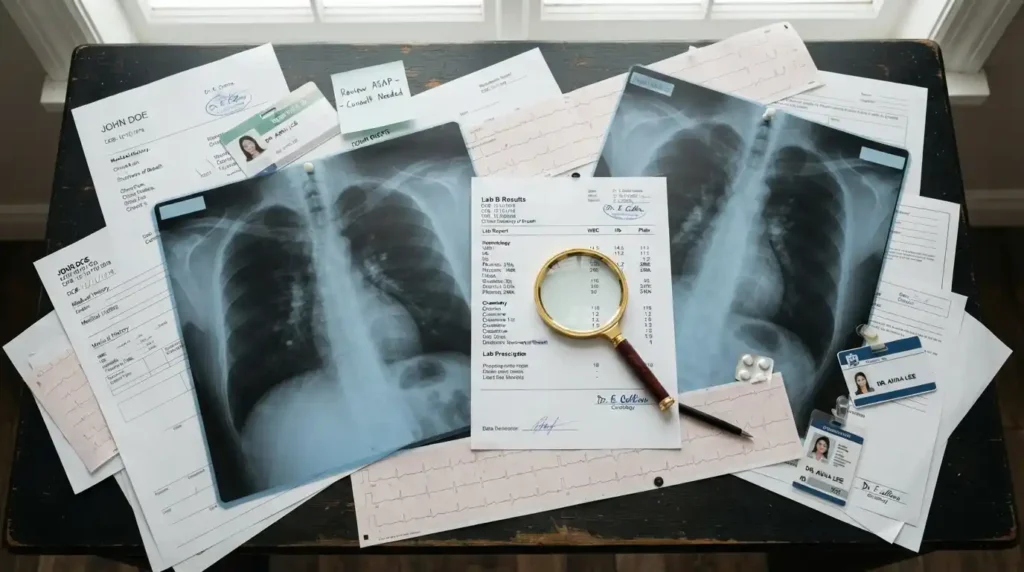
Healthcare documentation provides valuable insight into a patient's medical history. For legal professionals, these documents are significant when reviewing treatment, diagnosis, and overall health history.
Obtaining these documents often becomes challenging due to the complexity of the healthcare system. A single patient can have several providers, ranging from physicians to hospitals and diagnostic facilities. Each provider may require separate authorization to release information, which makes the process difficult. Additionally, every facility can have different guidelines for releasing patient documents.
Having a systematic approach helps organizations:
- Obtain the necessary healthcare documentation
- Reduce administrative burden
- Follow up on outstanding requests
- Ensure all the information is received
- Keep the information organized
- Facilitate legal and insurance-related needs
Lawyers with multiple cases face significant challenges when obtaining healthcare documents. Staff members may spend considerable time following up on requests, checking the status of submissions, and organizing received information. An organized approach can help such organizations reduce administrative work while boosting efficiency.
How to Retrieve Medical Records

Understanding how to retrieve medical records is vital for every individual or entity that intends to obtain healthcare documentation. Typically, the process consists of several steps, including determining the necessary information, locating the providers, preparing and submitting a request, following up on its status, and organizing the documents.
1. Determine the Necessary Records
The initial step involves determining the information needed for a particular purpose. In some cases, a request may cover an entire patient file. In other instances, it may be limited to specific information, such as treatment notes and billing details.
When submitting a request, it is essential to be as specific as possible concerning the information needed. Specific requests save time and help avoid unnecessary delays.
2. Identify the Healthcare Providers
After determining the information needed for a particular purpose, the next step is to identify the healthcare providers that have the required documentation. These facilities may include hospitals, physicians, specialists, and other entities involved in a patient's treatment.
After identifying the providers, individuals or entities can contact each facility to obtain the necessary information.
3. Prepare the Required Authorization
Most healthcare providers require valid authorization before releasing a patient's information. Therefore, an individual or entity requesting the documents must prepare the necessary authorization and submit it to the provider.
It is vital to ensure that the authorization is correctly completed to avoid delays in processing.
4. Submit the Request
After preparing the authorization, the next step is to submit the request to the appropriate facility. The submission procedure varies depending on the provider. Most healthcare facilities offer electronic request submission, while others require fax or mail.
5. Track and Follow Up on the Request
Even after submitting a request, it is essential to follow up to ensure that it is being processed. Some facilities require additional information, which may cause delays.
Tracking each submission makes it possible to determine whether the information has been released or whether additional documentation is needed.
6. Review and Organize the Records
After obtaining the healthcare documentation, it is essential to organize the information in a manageable manner. Proper organization ensures that the documents can be located easily when needed.
For legal professionals, well-organized files are particularly useful when reviewing a patient's medical history.
A systematic approach to obtaining healthcare documents is valuable for everyone who needs this information. It helps maintain efficiency throughout the entire process.
Medical Record Retrieval for Lawyers and Law Firms
Lawyers usually request medical records for personal injury, workers' compensation, medical malpractice, disability, and other legal cases. These documents enable legal professionals to review a patient's treatment history.
Obtaining this information becomes challenging when a patient's treatment involves multiple providers. Every provider may require separate authorization, which places a significant burden on legal professionals. Additionally, each facility can have unique requirements for releasing patient information, further complicating the process.
Law firms that handle a large volume of legal cases often face significant challenges when requesting and organizing healthcare documents. Therefore, many practices hire medical record retrieval services to assist them with this complicated process.
Medical Records Retrieval Services for Law Firms
These services help organizations request, track, collect, and organize healthcare documentation. They are particularly valuable to law firms because they can help manage large volumes of requests.
A specialized retrieval company can contact healthcare providers on behalf of a law firm and follow up on individual submissions. The provider can then gather the necessary information and deliver the documentation to the legal practice.
Such companies offer various services to help organizations efficiently obtain patient information. These may include:
- Preparing and submitting documentation requests
- Following up on denied or incomplete submissions
- Tracking the status of requests
- Collecting the requested documentation
- Reviewing received files for completeness
- Organizing the received documents
- Identifying any missing information
Using a specialized company can help law firms reduce the administrative burden of contacting multiple providers. Additionally, these services give legal professionals a clear overview of request statuses and the information that has been received.
What Do Medical Records Retrieval Companies Do?
Medical records retrieval companies help organizations request and organize patient documentation. Although every company may offer a different range of services, their primary function is to reduce the administrative burden associated with obtaining healthcare information.
A provider usually identifies the information that needs to be obtained and the healthcare organizations that possess it. The company then takes over the process of preparing and submitting the required requests to each facility.
After receiving the documentation, the service can help organize the files and deliver the information to the client.
Working with a reliable retrieval provider can help law firms reduce the amount of time spent contacting healthcare organizations and following up on submissions. Instead, legal professionals can use that additional time to review the obtained information and work on their cases.
Key Factors to Consider When Choosing a Medical Record Retrieval Company
When searching for a medical record retrieval company, law firms should analyze the available options and choose a provider that meets their specific needs.
Several factors should be considered when selecting a company, including experience, the ability to work with multiple providers, follow-up procedures, document organization, confidentiality, communication, customer support, turnaround time, cost, and available services.
Healthcare documentation contains sensitive information. Therefore, it is essential to choose a provider that employs appropriate confidentiality and security measures to protect patient data.
Source: U.S. Department of Health & Human Services – Medical Records
Medical Records Retrieval Companies vs. In-House Retrieval
Law firms have two options for medical record retrieval: completing the process in-house or hiring an outside company to handle the task. Both options have their advantages and disadvantages, and the best choice depends on the needs of the law firm.
| Factor | In-House Retrieval | Retrieval Company |
|---|---|---|
| Staff workload | Requires internal staff time | Reduces repetitive administrative work |
| Provider follow-ups | Managed by legal staff | Handled by the retrieval provider |
| Scalability | Can become difficult with many cases | Easier to manage larger volumes |
| Organization | Depends on internal systems | Often uses dedicated tracking processes |
| Cost | Internal labor and resources | Service fees based on provider and workload |
How Medical Record Retrieval Works for Legal Cases
For legal cases, the medical record retrieval process typically involves more than just requesting a patient's records. Law firms need to identify the relevant providers, submit the necessary requests, track each submission, and organize the received documentation.
A well-organized retrieval process can help legal professionals ensure that all the necessary information is obtained. If a patient has received treatment from multiple providers, each facility will need to be contacted to obtain the relevant records. By keeping track of all the submitted requests, law firms can ensure that all the necessary documentation is received and organized properly.
After the requested records have been obtained, they can be organized according to the needs of the legal case. Once the relevant information has been extracted, legal professionals can use the retrieved records to review the patient's treatment and medical history.
Common Challenges in Medical Record Retrieval
Medical record retrieval can be a time-consuming and challenging process, especially for law firms that need to request records from multiple providers. While the task may seem straightforward, there are several common challenges that can prolong the retrieval process and make it more difficult.
Some of the most common issues include:
- Incomplete patient information
- Incorrect or outdated provider information
- Delayed responses from providers
- Missing or incomplete records
- Requests that require additional authorization
- Records that are held by multiple providers
- Challenges with tracking and following up on requests
These issues can be especially problematic for law firms that need to process a large number of requests. If a retrieval service is used, these challenges can be minimized by implementing a reliable tracking system that helps identify issues and ensures that all requests are followed up on.
How to Choose the Right Medical Records Retrieval Company
When selecting a medical records retrieval company, law firms should consider their specific needs and make sure that the provider has the necessary experience and resources to handle their requests.
Some law firms may only need to request a few records, while others may need to process hundreds of requests. For organizations that handle a high volume of record requests, it is essential to choose a retrieval company that can scale according to their needs.
Law firms should also ask about the company's procedures for submitting record requests, following up on denied or incomplete requests, and organizing the received documentation. It is also important to ask about the security measures that are used to protect sensitive patient information.
By reviewing these factors and comparing different providers, law firms can choose a medical records retrieval company that offers the most reliable and efficient service.
Frequently Asked Questions
1. What are medical records retrieval companies for lawyers?
Medical records retrieval companies for lawyers are organizations that assist law firms in retrieving, tracking, managing, and collecting healthcare records relevant to legal matters.
2. What do medical records retrieval companies do?
Medical records retrieval companies engage in handling the task of obtaining medical records from hospitals, doctors, clinics, laboratories, and other healthcare providers.
3. What are medical records retrieval jobs?
Medical records retrieval jobs typically require requesting medical records, communicating with providers, tracking the status of requests, following up on any issues or delays, and organizing the retrieved information.
4. What should you look for in top medical records retrieval companies?
When selecting the best medical records retrieval companies, law firms must consider factors such as experience, tracking and turnaround time, documentation organization, communication, and data security.
5. What are record retrieval solutions?
Record retrieval solutions are products or services that facilitate finding, tracking, requesting, and managing medical records.
Conclusion
Medical records retrieval is essential in helping law firms and other organizations get the documentation they need from medical providers. From locating providers to requesting and receiving records, and even organizing them, it is a delicate process.
Law firms, especially those with many cases, could benefit massively from medical record retrieval companies by outsourcing this task; therefore, reducing their workload and allowing them to focus on what is essential in handling a case. Whether it is done internally or by professionals, record retrieval needs to be precise and organized to help firms get everything they need as fast as possible.