

Key takeaways
- PDPM optimization means maximizing the accuracy and consistency of the information used to classify a resident's stay rather than chasing the highest possible reimbursement code.
- Accurate documentation, not more documentation, is what protects a skilled nursing facility (SNF) from audit risk and denied claims.
- The current guidance document is the CMS MDS 3.0 RAI Manual, version 1.20.1, effective October 1, 2025.
- Optimizing (aligning documentation with actual resident status) is not the same as maximizing. And treating them as the same thing is the single biggest compliance risk facilities face.
What Is PDPM Optimization?
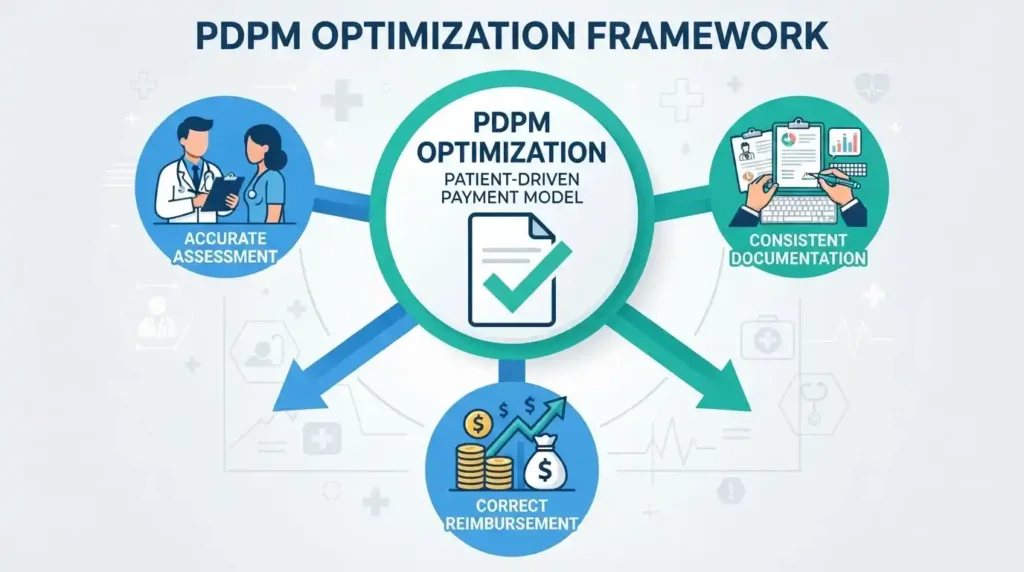
Optimizing the Patient-Driven Payment Model means improving the accuracy and consistency of the information used to classify a resident's stay. It also means ensuring that the documentation accurately describes the services provided. Facilities should not use codes based solely on improper documentation to obtain higher reimbursement.
The main goal of improving PDPM classification is to ensure consistency among the resident's assessment, medical records, and treatment. Skilled nursing facilities must manage several tasks to achieve optimal performance. Although clinical care remains the facility's top priority, staff must also complete accurate assessments and documentation. These steps benefit the resident and support proper reimbursement. Such tasks are governed by the rules established by the Patient-Driven Payment Model, hence the importance of PDPM optimization.
Why Is MDS Accuracy in Skilled Nursing Important?
The Minimum Data Set (MDS) skilled nursing facility assessment is a multi-faceted process that involves obtaining pertinent data regarding the resident's condition, functionality, treatments, diagnostics, and other factors. Due to the complexity of the procedure, the information that must be gathered is extensive. In fact, the data collected through it serves several important functions.
For this reason, the accuracy of information is essential since it lays the foundation for subsequent actions. For instance, if the resident's clinical record contains information that contradicts the data obtained through the assessment, another professional reviewing it might take the wrong action, believing that the clinical record is up to date and accurate. It is also essential to realize that documentation errors are often the result of multiple smaller mistakes.
This is where consistent, well-supported clinical documentation across every discipline nursing, therapy, and the front office alike makes the biggest difference. Facilities that rely on dedicated clinical documentation support to keep records complete in real time tend to catch these contradictions before they reach the assessment stage.
Who Is the MDS Coordinator in a Skilled Nursing Facility?
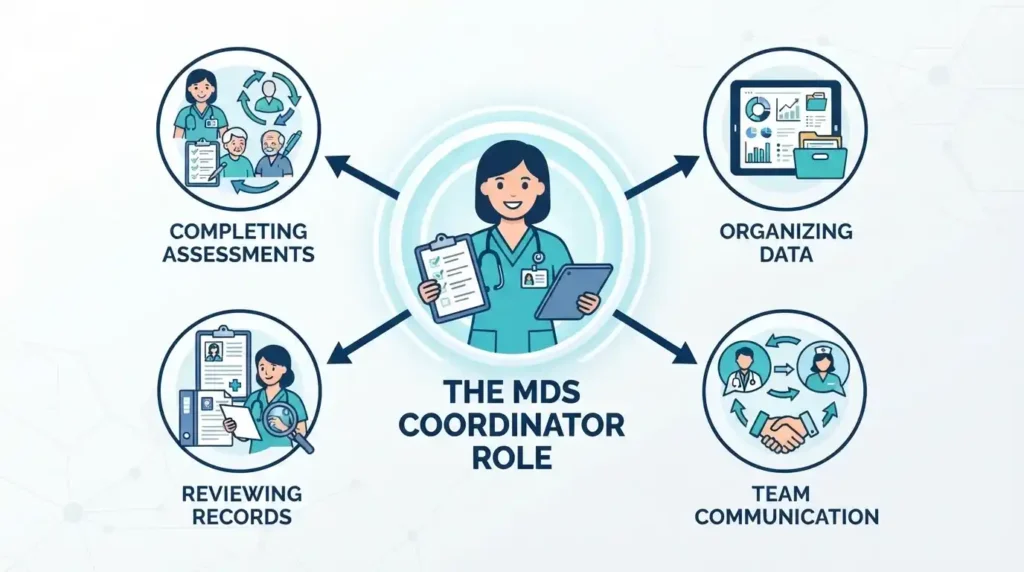
The MDS coordinator position is typically responsible for completing assessments, organizing information, reviewing the completed work, and communicating with other team members regarding the necessary actions. In other words, the MDS coordinator role requires following all established procedures to ensure the accuracy and consistency of the collected data.
One of the most prominent mistakes an MDS coordinator can make is attempting to document the resident's status at the very end of the process. The best way to avoid MDS accuracy issues is to follow the established procedure and complete the required steps as the care is delivered. This way, the MDS coordinator will be able to organize all the necessary information and produce an assessment that is comprehensive and accurate.
For the full assessment procedure, see the CMS Resident Assessment Instrument (RAI) Manual page.
What Is the Current MDS Documentation Manual?
The MDS documentation guidance can be found in the CMS MDS 3.0 RAI Manual. According to the most recent information published on the CMS website, the currently active manual is version 1.20.1, which became effective on October 1, 2025. The most recent updates to the CMS MDS Technical Information Manual were issued in July 2026.
How Does Improved Documentation Support Reimbursement?
There is a common misconception that improved documentation means writing more information. In reality, it refers to providing more accurate information to support the services rendered in order to justify the reimbursement. This is especially important in the context of PDPM optimization. Even though a skilled nursing facility provides high-quality care to its residents, appropriate reimbursement can be in jeopardy if the documentation is inadequate.
Documentation accuracy and reimbursement accuracy are two sides of the same coin a facility's entire revenue cycle management process depends on the clinical record supporting every code that's billed.
A thorough internal documentation review should therefore include the following points:
- Does the resident assessment support the clinical record?
- Are the diagnoses accurately documented?
- Are there any treatments that were not adequately recorded?
- Do therapy and nursing records agree with one another?
- Is there any information that contradicts other information in the record?
- Are there any other issues that you see?
MDS Documentation Best Practices in Skilled Nursing
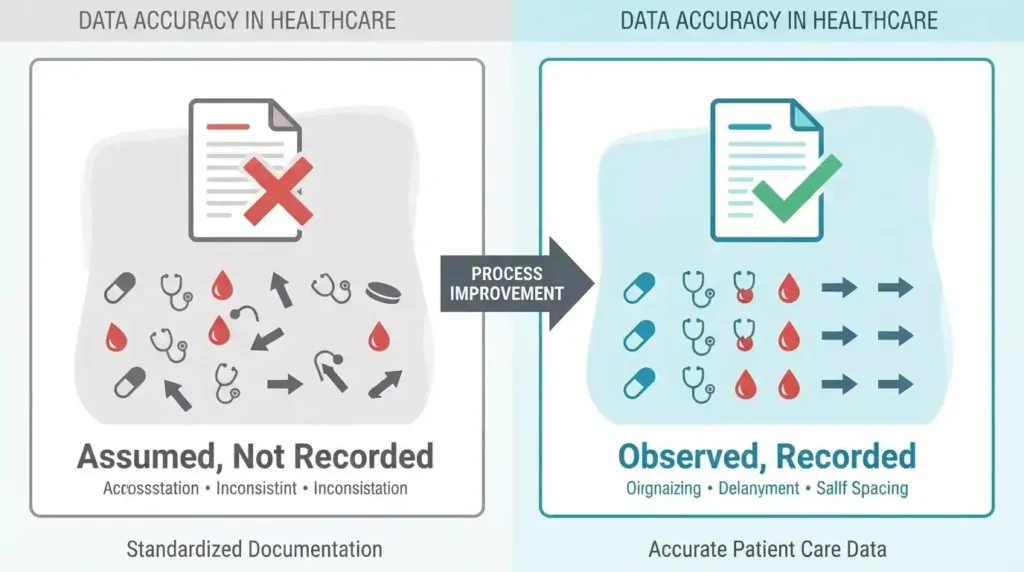
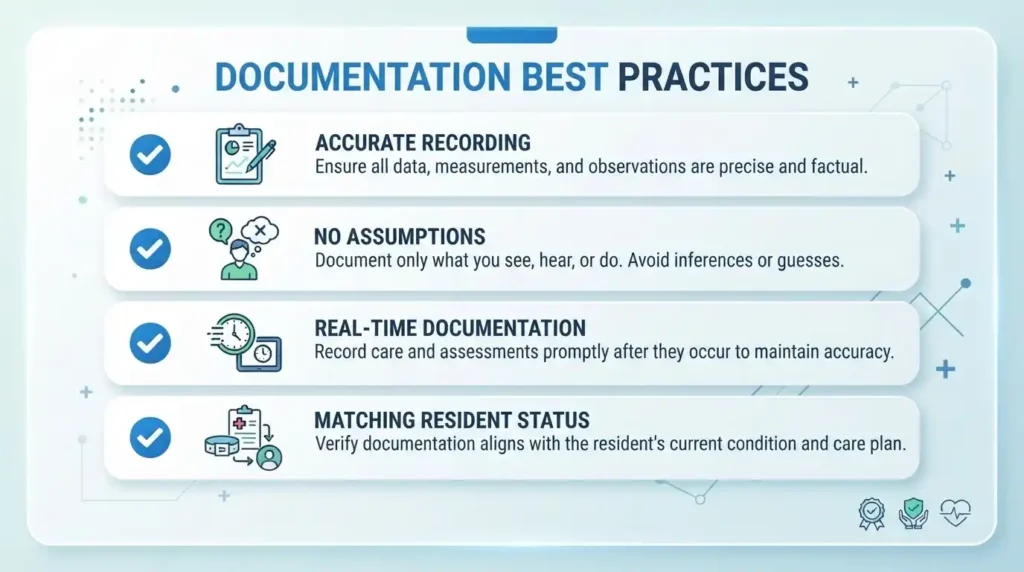
One of the most common documentation errors stems from inaccurate assumptions made by the team. For instance, a resident may require additional assistance; however, staff may not document it because they believe the resident should be able to manage on their own.
The most accurate MDS documentation is documentation that describes the resident's condition and the care they receive without adding or omitting information. In other words, the documentation should reflect the resident's actual status. That way, the assessment will be based on documented data, which allows for more accurate results.
Understanding PDPM Case Mix Classification
At first glance, PDPM case mix classification seems rather complicated; however, it really is not. In short, the assessment information determines which case mix category the resident falls under. There are also multiple factors that must be taken into consideration, such as the resident's status and the treatments they received.
The most important thing for skilled nursing facilities to realize is that the classification is entirely dependent on the information that was submitted and the policies that were followed. A more useful question is how to ensure that the resident's assessment accurately reflects their status. That way, the classification will change, if necessary, because the resident's condition warrants it rather than because of the staff's intentional efforts.
What Is an Efficient Way to Review Documentation?
When reviewing documentation prior to assessment and reimbursement, a facility can utilize a simple checklist to verify that the resident's status, as well as the documentation, are accurate. For instance, the following questions should be asked:
- Does the clinical record support the resident's assessment?
- Does the MDS assessment support the coding and classification?
- Does the record support the treatments rendered?
- Are there any inconsistencies between the documentation and the resident's assessment?
If you answer one or more of these questions negatively, review the documentation to determine the issue before making any assessment adjustments. This approach helps the skilled nursing facility identify recurring problems and address them through staff training. It also reduces the need for minor changes every time a billing error occurs.
How Does PDPM Compare to RUG-IV?
Many SNF professionals who have experience working with RUG-IV classification find the transition to PDPM confusing. RUG-IV had been in use for several years and had shaped how many SNF professionals handled their responsibilities. As a result, many professionals resisted the transition to the new system.
The main difference between RUG-IV and PDPM is that PDPM emphasizes the resident's characteristics and specific components of care. Essentially, PDPM is more nuanced, which is why reimbursement rates changed so significantly.Therefore, SNF professionals must ensure that the documentation accurately reflects the resident's needs and the care they receive during the assessment.
Why Do Documentation Errors Keep Happening?
As stated previously, MDS documentation is rather complex.As a result, professionals can easily make mistakes by omitting or incorrectly documenting certain facts. While some documentation errors occur accidentally, others stem from a misunderstanding of the issue at hand. Either way, the MDS coordinator must understand that mistakes can be avoided with proper training.
Documentation errors that go unaddressed are also the most common root cause behind denied claims see our guide to denial management in healthcare for how billing teams identify and resolve the underlying documentation gaps once a claim is rejected.
Why Has It Been So Difficult to Change the Habits of Experienced Staff?
The established practices of experienced staff must be revised to ensure they align with current regulations. In most cases, the MDS coordinator role can be challenging, and the professionals who fill it tend to develop certain strategies to expedite the process. Unfortunately, such tactics often lead to errors due to omissions or intentional alterations.
A more efficient way to reduce billing and reimbursement errors is to ensure that all staff members understand the updated documentation requirements. This approach helps eliminate errors caused by misunderstandings and habits developed before PDPM implementation.
Why Should the Facility Team Review the Most Recent RAI Manual?
The CMS MDS 3.0 RAI Manual contains relevant information about assessment procedures and documentation guidelines. Staff must follow these guidelines when completing documentation. The Medicare SNF PPS chapter provides a detailed overview of PDPM classification. It helps skilled nursing facilities handle reimbursement correctly.
A Practical Checklist for SNF Reimbursement Optimization
| Area | What to Review | Why It Matters |
|---|---|---|
| MDS assessment | Is information complete and supported? | Reduces inconsistencies |
| Clinical documentation | Does it reflect actual care? | Supports the assessment |
| Diagnosis information | Is it properly documented and supported? | Helps accurate classification |
| Staff communication | Are relevant changes shared promptly? | Prevents missing information |
| Review process | Are unusual cases checked? | Finds potential errors early |
Reduce PDPM Audit Risk
Beyond reimbursement, facilities have to consider compliance when it comes to PDPM. The documentation needs to be clear enough that the reasoning behind the assessment and subsequent classification can be understood by an auditor.
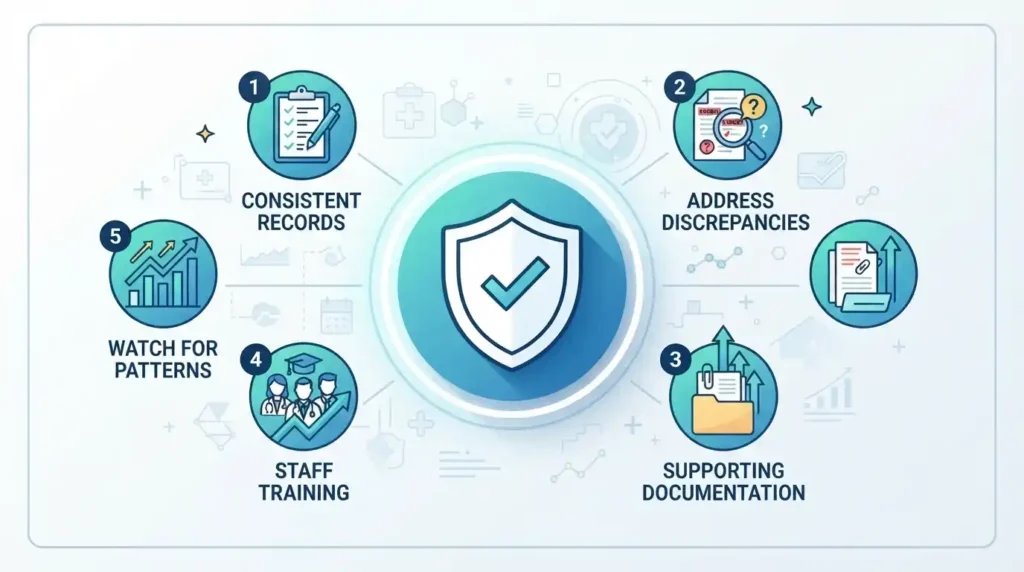
Here is how facilities can reduce PDPM audit risk:
- Keep records consistently documented across disciplines.
- Identify and address discrepancies.
- Maintain appropriate supporting clinical documentation for diagnoses.
- Train staff whenever recurring patterns show up.
- Pay attention to odd patterns before they become bigger issues.
Avoiding optimization in favor of maximization is probably the most crucial tip. Optimization is not the same thing as maximization.Trying to place every resident in the highest possible category can cause problems when the documentation does not support it. Instead, focus on improving the process and ensuring that the information is accurate and complete. This approach will provide a more accurate picture of the resident.
Frequently Asked Questions: PDPM and Accuracy of the MDS
What is PDPM optimization?
The goal is to optimize assessment, documentation, coding, and processes so that a resident's PDPM classification accurately reflects the services provided and the documentation in the resident's record.
How can facilities improve MDS accuracy?
By following CMS guidelines, communicating effectively across disciplines, reviewing documentation for consistency, providing ongoing education, and addressing discrepancies before assessments are finalized.
What does an MDS coordinator do?
Coordinates the assessment process, including communication among team members, and reviews and completes the required assessments.
How can a skilled nursing facility improve its PDPM scores?
By improving the consistency, accuracy, and documentation of resident services rather than "maximizing" scores through coding tricks. When those things are done correctly, an accurate score follows naturally.
What is the MDS 3.0 assessment guide?
The CMS MDS 3.0 RAI Manual is the official guidance document for completing the MDS assessment. The CMS website lists the current manuals and item sets.
What is the difference between PDPM and RUG-IV?
Both systems affect how skilled nursing facilities receive reimbursement for resident services, but they use different methods. Under RUG-IV, reimbursement depended heavily on therapy minutes. In contrast, PDPM uses a more comprehensive assessment that considers several factors beyond therapy.
How can documentation reduce audit risk?
Documentation that supports the recorded information and is consistent between disciplines reduces risk. Facilities should always reference the latest CMS guidelines and address discrepancies promptly.
Conclusion
Getting reimbursement right starts with getting the information correct first. When it comes to skilled nursing facilities, it is best to optimize the PDPM score rather than maximize it. That way, the resident receives the care and treatment they need, and the reimbursement accurately reflects the facility's costs for caring for that resident. It is a collaborative effort between the facility and the resident.
The MDS coordinator probably carries the most responsibility when it comes to assessments, but nurses, therapists, physicians, coders, and others all play a role. All the information that goes into the assessment, from every discipline, has to be accurate and consistent for the final assessment to be correct.
CMS often updates its own documentation, so facilities should rely on the most current information available on the CMS website. As of June 2026, the CMS MDS page was last updated, and the technical information page was updated as recently as July 2026. Documentation that supports the information in the record will always reduce a facility's audit risk, as will having a consistent process everyone follows.
At the end of the day, that is what good PDPM optimization is all about getting the details right so facilities reduce unnecessary compliance and audit risk while ensuring residents get reimbursements based on actual services.